Economic calendar guides
Understand the releases behind the calendar and use the recorded data in your research, application or AI assistant.
Browse articles
6 articles
Economic calendar weekly briefing for 16–22 November 2026
Key economic releases for 16–22 November 2026 and selected official results from 9–15 November 2026.
UK Budget 2026: why households may still feel squeezed
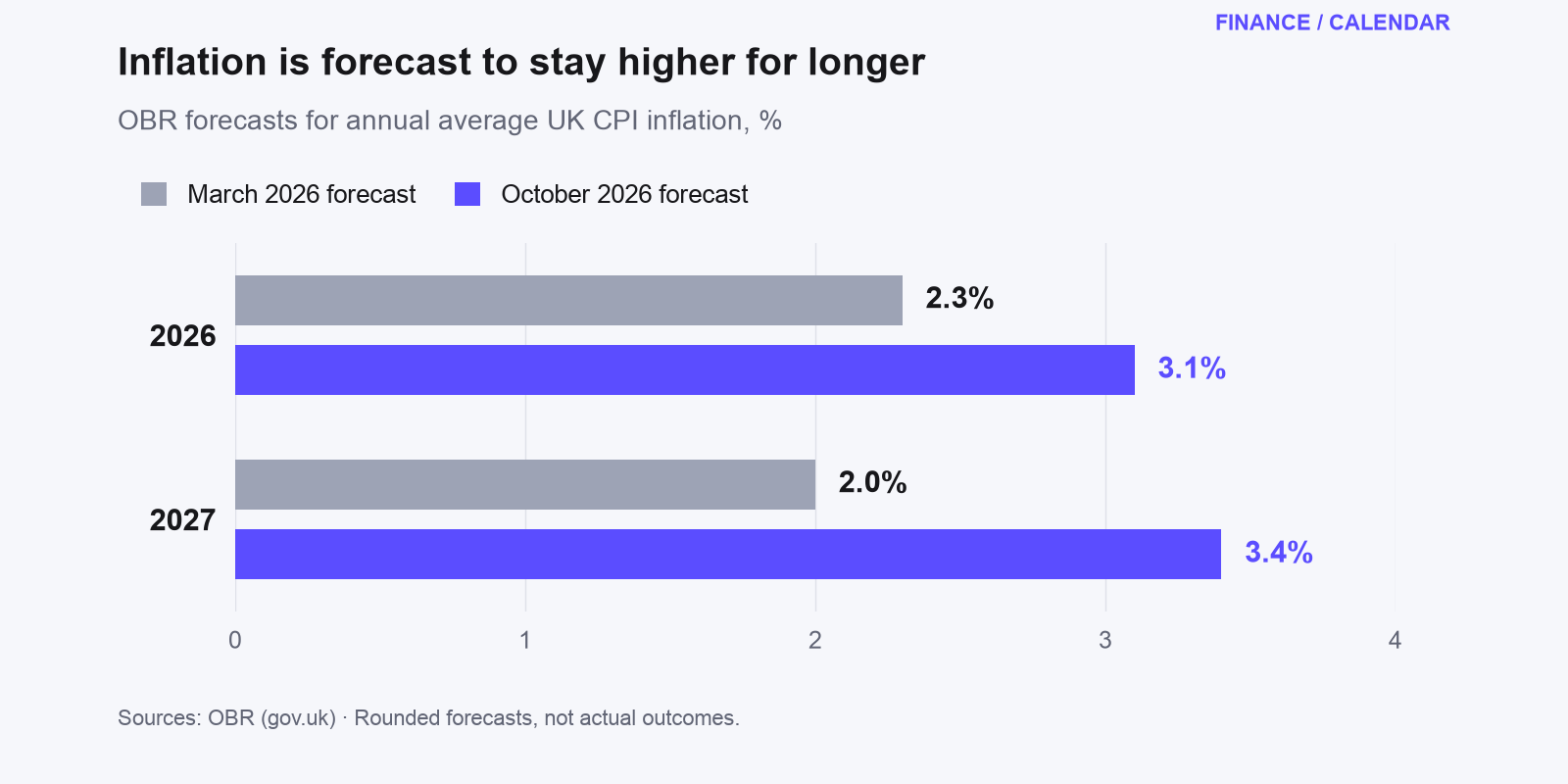
A £100 energy payment offers help to eligible households, but higher inflation forecasts explain why lasting relief may take longer. We examine the numbers, eligibility and dates that matter.
US vs UK GDP growth: comparing annualised and quarterly rates
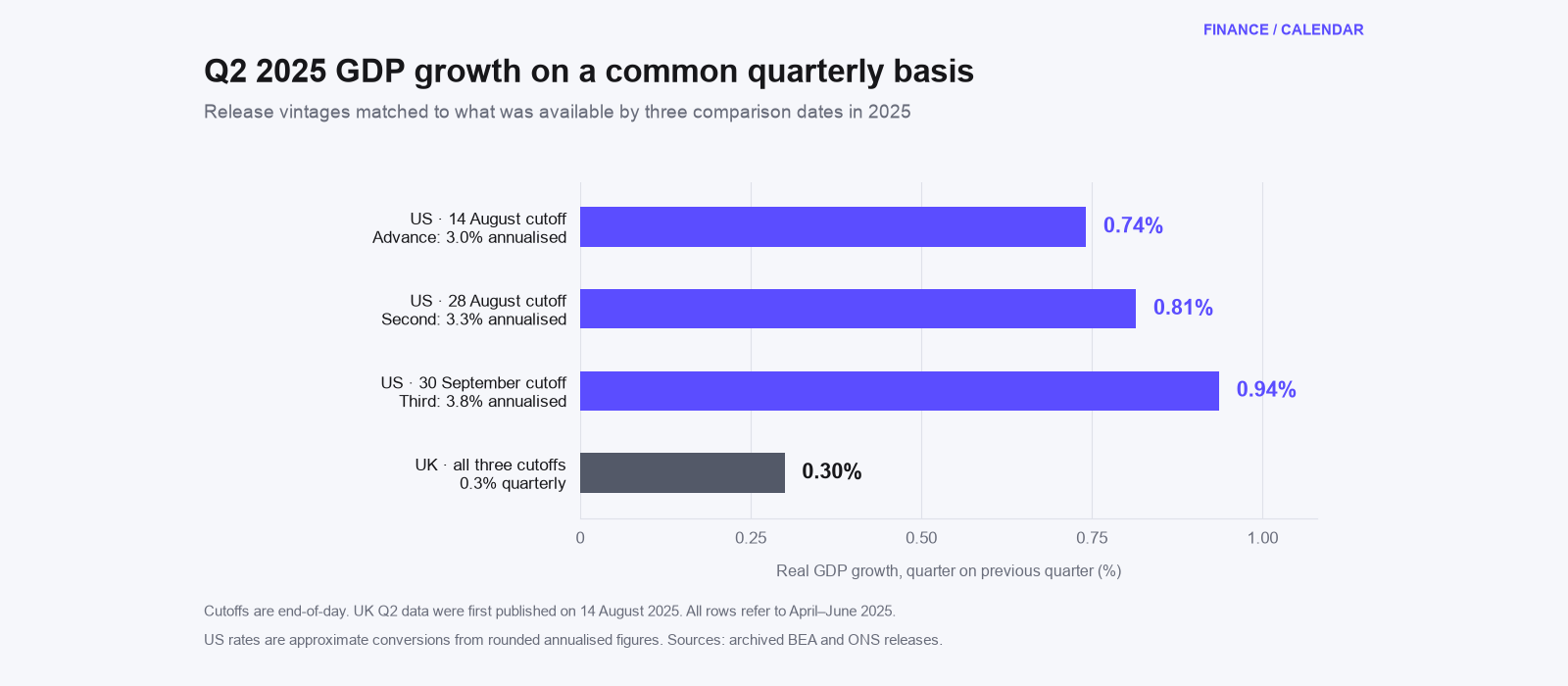
A worked Q2 2025 comparison shows how to convert US and UK GDP growth, match publication vintages and avoid confusing a growth revision with a change in GDP levels.
US payroll revisions: what changed in the first half of 2025
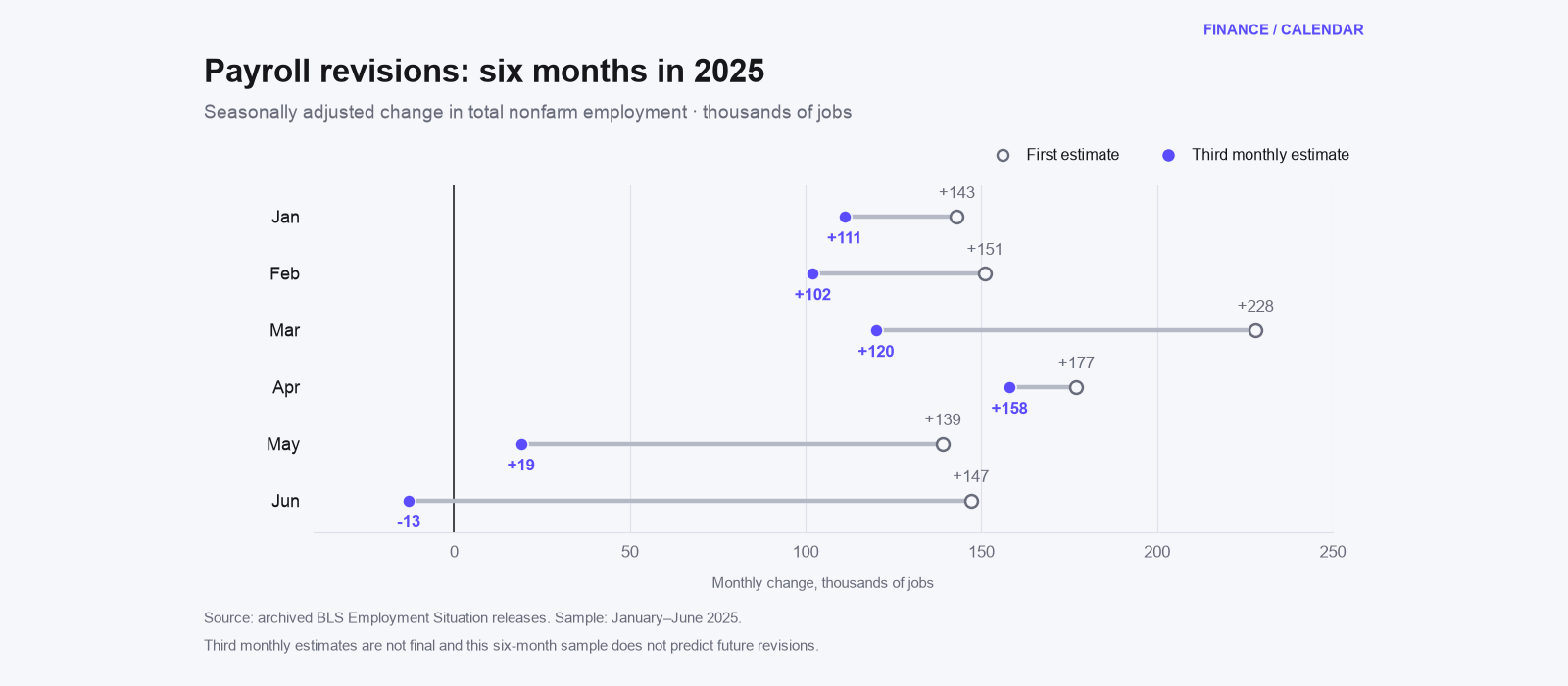
A source-linked study of six months of US payroll estimates: what changed between the first and third releases, how to reproduce it, and why the limits matter.

US–UK stock market overlap in 2027: holidays, early closes and clock changes
See when NYSE and London cash sessions overlap in 2027, including clock-change weeks, market holidays and half-days with no shared trading window.

What data will the Fed have before its December 2026 decision?
From 1 November, official schedules put two jobs reports, one CPI release, one PCE report and a GDP update before the December Fed decision. Our timeline shows the different…
Calendar guides
Start with the date you need, then follow the release back to its schedule and original publisher.
Read the calendar
A release date tells you when information is published. Its reference period tells you which month, quarter or week the figures describe. They can be different.
Known times include a timezone. A date-only record means the publication time is not confirmed; it does not mean midnight.
Understand the release
Read the previous figure and, where available, the latest actual result. A missing value means it is unavailable. A released status alone does not guarantee an actual figure has been recorded.
Check dates and sources
Estimated schedules can change. Source coverage differs by country, series and date window. The dataset build time is separate from the time a publisher schedule was last verified.
Plan around market holidays
Stock exchanges and bond markets can follow different holiday and early-close schedules. Check the relevant market and year.
Use the data
Build a release calendar into an application, query it from an assistant or download a date window for your own workflow.